

Connect:    


Event Calendar

Some useful links

Online Courses

Articles


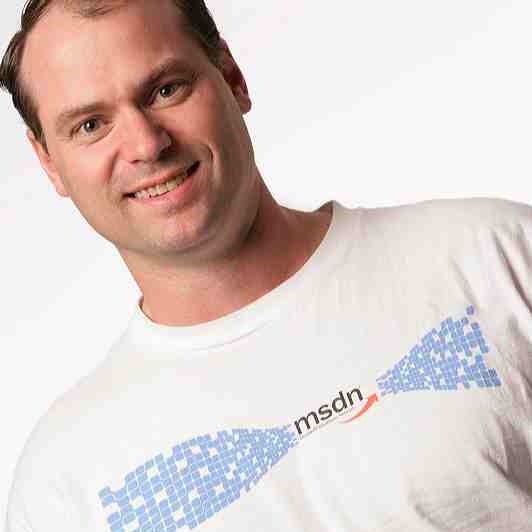
A software architect, Azure expert, and former Microsoft evangelist, Mike Benkovich dedicates huge amounts of his time to helping his fellow developers and burgeoning programmers learn about new technologies and platforms. Mike’s website equips developers with tips and resources to help them get to grips with technologies including cloud, data and devices, and he produces online courses covering areas like Azure enterprise development and serverless computing. Mike is also a chronic sharer of puns, so head over to his Twitter feed if you’re after a laugh (or a groan).

BenkoBLOG by Tags

Benko Blog

A World without Blueprints

MikeBenkovich | 4/29/2025

Imagine you’re handed a pile of bricks, lumber, and nails—no blueprint, no plan, no guidance—and told, “Build me a fortress that will stand for centuries.” You start stacking bricks, hammering boards. You hope your walls are straight, your gates secure, your ramparts high enough to repel invaders. You pray you remember every measurement, every joist placement, every bolt torque.

That… is how most organizations still build their cloud environments today. We hammer in security rules by hand. We patch servers one by one. We scramble to recover from failures without a guide. And when disaster strikes, the walls collapse like a house of cards.

Now, picture a different scene: You stand at your keyboard, you click run—and lines of code that you defined every server, every network, every firewall rule start running. You press Deploy, and in minutes your fortress rises, identical in every test environment, every region, every time. No guesswork. No finger-crossing.

  • Consistency in Every wall is laid true to the requirements and design.

  • Secured Every gate is reinforced with best practices and security guidlines in mind

  • Every tower has a lifeline (backups and DR).

Your environment is no longer a fragile assembly of one-off changes. It is a living artifact, defined in Code, versioned in Git, peer-reviewed, tested like your application code.


Why You Can’t Afford to Wait

  • Human Error becomes a myth: No more fat-fingered deletions or midnight firefights.

  • Configuration Drift is dead: What you tested in staging is exactly what runs in production.

  • Recovery is an automated heartbeat: Spin up the exact replica of your world in another region in minutes.

  • Compliance & Audit happen by default: Every change is a pull request you can trace, review, and rollback.

  • Cost Control is built-in: Tear down ephemeral environments the moment you’re done with them—no more orphaned servers quietly burning your budget.

This isn’t a “nice to have.” It’s the difference between surviving the next storm or watching your walls crumble.


The Forge: Tools of the Trade

  • ARM Templates & Bicep: Native Azure blueprints with first-class support and modularity.

  • Terraform: Multi-cloud sorcery that speaks the language of AWS, GCP, and Azure alike.

  • Pulumi: Write your infrastructure in C#, TypeScript, or Python—turn your Dev skills directly into cloud metal.

Each of these is your blacksmith’s hammer, your crucible for shaping resilient infrastructure.


Call to Action — Five Minutes to Build Your First Wall
I’m asking for five minutes—a small investment for a giant leap in reliability. In five minutes, I’ll show you how to:

  1. Define a simple network, a VM, and a load balancer in code.

  2. Deploy it repeatedly, in any region, with zero manual steps.

  3. Tear it down when you’re done, so you only pay for what you use.

By the end of that demo, you’ll see how IaC transforms your cloud from a labyrinth of one-off scripts into a codified, battle-tested fortress.

The choice is yours

You can keep building with mortar and guesswork. You can cross your fingers and hope nothing breaks. Or… you can forge your infrastructure in code, version it, test it, and trust it to stand against any siege.

Which would you rather have—sandcastles or stone fortresses?

Five minutes is all it takes. Let me show you the blacksmith’s forge. Let’s build something that lasts.


Reviewing Julie Ng's CI/CD Checklist

MikeBenkovich | 8/7/2023

I recommended a video by Julie Ng, who has a blog and a video thing on YouTube you can subscribe to that provides some great information about containerization, kubernetes and Azure. The video is CI/CD Review - How DevOps in Real Life & Mature Organizations works | Julie Ng

Here's some tools and links from Julie's talk


The Right Things

MikeBenkovich | 1/5/2023

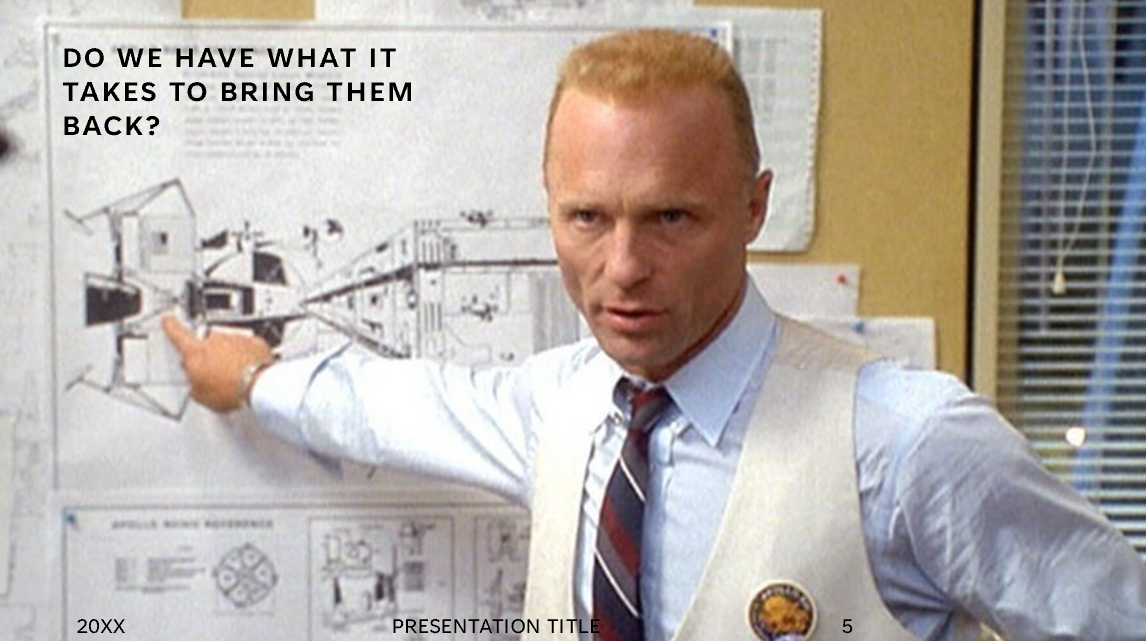
I was watching the movie "The Right Stuff" over the holiday week and was impressed by how far we've come in terms of technology and using it to help us accomplish amazing things. From the story of Chuck Yeager chasing the demon in the sky limit of Mach 1 in the Bell-X1 to how they developed the Mercury project to launch space exploration, I loved seeing how the people and technology were used to make it possible. Of course there were mistakes, but without trying how do you learn? 
Doing things right is a mindset that is a requirement if you want to get in the game anymore. It's no longer good enough to think we can just show up and get paid, we have to provide value. The value of being willing and able to make decisions and try the impossible, by reaching for the sky we don't come up with a handful of mud. But is doing enough?

Doing Things Right

In the movie Apollo 13 we see Tom Hanks play Jim Lovell as the commander of the crew that experiences what can go wrong, and we see how the team responds to see if they have what it takes to bring them home. The challenge comes when one of the oxygen tanks malfunctions and damanges the return ship on their way to the moon. The drama plays out, but ultimately by thinking outside the box the team on earth comes up with ways to repair enough of the damage to bring them home.

Doing things right means having the right people in the right places there when you need them. Knowledge of what's possible, how to do things, what tools work for which jobs, all of these are important. Knowing how and when to combine the ingredients are what separates the star baker of the week from the one who gets voted off the island. It might mean finding someone who's done it before and knows the things to avoid. Doing things right is a whole lot easier than doing it poorly and doing it again and again.

For example, in the work that I do we're talking about containers and infrastructure and cloud. It is important to understand Docker and Kubernetes, as well as DevOps and Infrastructure as Code options like Terraform or Bicep. Doing things right means combining these tools to develop and deliver solutions where we follow sound project management practices. Whenever I come across a new project there's good questions to ask so you can get an idea of where things are at.

But Because you Can Doesn't Mean You Should

With that said, does the use of these tools and technologies mean success? Should we use containers and DotNet Core with WebAPI's? Should we use Agile and 2 week sprints with daily scrum meetings? We are putting together a team and it's going to go in and solve the challenge and keep the world safe for technology!

Sometimes we immediately prescribe an answer, using our best practices and ensuring we're using the right stuff to deliver value, but we fail to hear the requirements and understand the lay of the land. We kick off the project and by hook or by crook we drive the daily scrums and manage the sprints and work like crazy. We dedicate ourselves to the task at hand and make sure everyone participates. We deliver our solution, then realize it solves the wrong problem.

Do the Right Things

We fail to ask the right questions, so we end up doing the wrong things. Who is our team, and what is their experience? How much learning do we need to do to bring people up to speed? What is the timeline and who is the audience? The consultant's answer is it depends. Who do you ask? What is the vision and how is it related to the mission we're working on? Based on this are we ready to move on to new tools and technologies? Are we ready to make smart decisions that fit the reality we are in? 

As 2023 starts out it's apparent to me that we need to make time to reflect and give some space to think before we act. Doing is good, but sometimes not doing or doing something else is better.


Agile DevOps West 2022

MikeBenkovich | 6/16/2022

This week in Las Vegas at the Agile DevOps West conference I'm presenting the session Permit to Cloud - Land with Confidence in Azure!

We'll talk about a lot fo things, but the goal is to provide an introduction to how to get started with Azure in a way that will help ensure continued success in taking advantage of the promises the cloud offers. For the code and demos I've published them to https://github.com/benkotips/askdad - Check it out!


DevUp 2022

MikeBenkovich | 6/8/2022

Guess What? In person events are a thing again,  and I'm back on the road. It's great to be back to St. Louis, this week I'm delivering sessions at DevUp on how to work with Azure and Infrastructure as Code topics. 

  • Permit to Cloud : Land with Confidence in Azure
  • Cosmos DB Performance Tuning
  • Infrastructure as Code Bake-off : Comparing ARM, Bicep, Terraform and Pulumi

The link to the code is on GitHub at https://github.com/mbenko/du22-ptc - Check it out!


Azure Office Hour Fridays

MikeBenkovich | 5/4/2021

Thinking about going to Cloud? I've been consulting around Azure for the last 8 years since I left Microsoft where I helped launch it in 2009. I want to offer my support, so I'm starting a thing called Azure Office Hours on Fridays, where anyone can block out 15 minutes to chat about anything Azure.

  1. Find a time that works - https://bit.ly/BnkAzHrs 
  2. Let me know what you want to talk about
  3. Let's chat! 

I speak at conferences and have LinkedIn learning courses on Azure and DevOps including templating, compute, storage, messaging, networking and governance topics.

My calendar is open. Let's connect!


Using Cosmos DB for my Blog

MikeBenkovich | 4/30/2021

Have you thought of using new/different technologies to explore the impact of using new tools? I'm presenting a new session at Minnesota Developer Conference on Tuesday 5/4/2021 (Star Wars day) that will explore the technology and implementation details to make this type of implementation work.

Check it out!

Cosmos Tools for the Relational Developer

Tuesday 5/4 at 11:00 am - MDC 2021 | Minnesota Developers Conference (mndevconf.com)

Understanding how your data works is crucial to taking advantage of the capabilities and power of Cosmos DB, from setting up and migrating data, to querying to understanding performance consequences of data manipulation. These tasks become easier thanks to a growing ecosystem of tools around the Cosmos DB platform. In this session we'll look at how Cosmos DB tools available from Microsoft and 3rd parties make it easy to make the transition from the relational to Cosmos.

The topics we'll cover include:

  • Why Azure Cosmos DB
  • Provisioning a Cosmos DB from the Azure Portal
  • Code patterns for working with Cosmos
  • Data Migration
  • Data Modeling and strategies for performance and cost optimization

Some reference links:

Enjoy!


Archive